I Mixed White Vinegar With Dawn Dish Soap and Sprayed It on My Shower Walls — Here’s What Happened

Things You’ll Need
- 1 spray bottle (16 oz or larger)
- 1 cup white vinegar
- 1 cup original blue Dawn dish soap
- Scrub brush or nylon-bristle brush
- Microfiber cloth or sponge for rinsing
- Gloves (optional, to protect your hands)
- Fan or open window for ventilation
Step-by-Step Instructions
1. Heat one cup of white vinegar in the microwave for about 45 to 60 seconds. You want it warm, not boiling. Warm vinegar activates the acetic acid and makes it far more effective at breaking down mineral deposits and soap scum.
2. Pour the warm vinegar into your spray bottle. Then add one cup of original blue Dawn dish soap directly on top. Do not shake the bottle vigorously. Instead, give it a gentle swirl or tilt it back and forth a few times. Shaking creates excessive foam that will clog the nozzle and make spraying difficult.
3. Remove everything from your shower walls and floor. Take down shampoo bottles, soap dishes, loofahs, and any other items. You want every inch of the surface accessible.
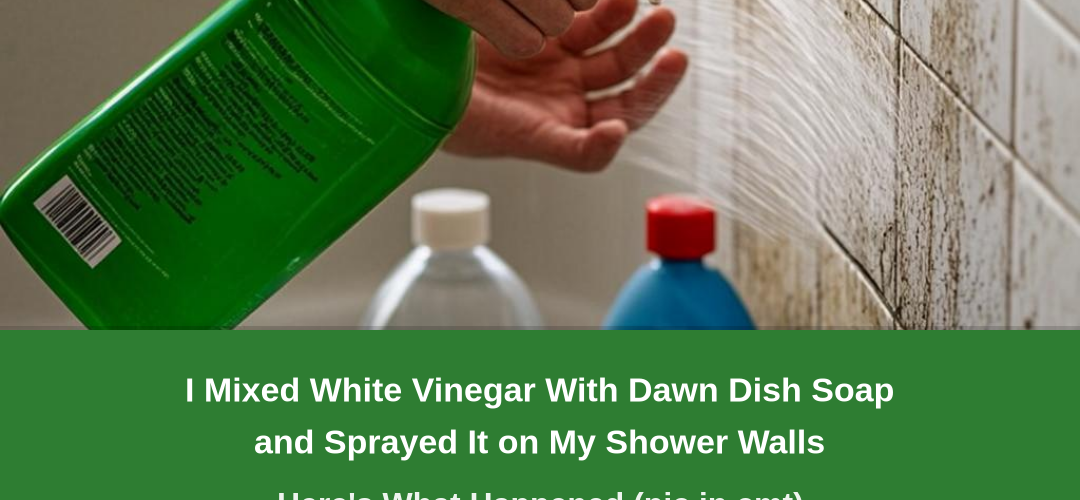
4. Spray the mixture generously onto your shower walls, starting from the top and working your way down. Pay special attention to the corners, around the drain, and any areas with visible soap scum buildup or hard water stains.
5. Let the solution sit for at least 30 minutes. For stubborn stains, you can leave it on for up to an hour. During this time, the acetic acid in the vinegar is actively dissolving calcium and magnesium deposits while the Dawn surfactants penetrate and break down the oils and body fat trapped in the soap scum.
6. After the waiting period, take your scrub brush and gently scrub the walls in circular motions. You do not need to apply heavy pressure. The combination should have loosened most of the grime, and a light scrubbing is all that’s needed.
7. Rinse thoroughly with warm water. Use a handheld showerhead if you have one, directing the water from top to bottom. Make sure every trace of the cleaning solution is removed.
8. Dry the walls with a microfiber cloth or squeegee to prevent new water spots from forming.
Why This Works
The magic behind this cleaning hack comes down to basic chemistry. White vinegar contains acetic acid, typically at about five percent concentration. Acetic acid is a weak acid, but it is strong enough to dissolve alkaline mineral deposits like calcium carbonate and magnesium carbonate — the compounds responsible for hard water stains and that chalky white film on shower doors.
Dawn dish soap is a powerful surfactant. Surfactants lower the surface tension of water, allowing it to spread more easily and penetrate grease, oils, and organic matter. When you combine Dawn with the vinegar, the surfactants help the acidic solution reach deeper into the layers of soap scum, body oils, and residue that accumulate on shower surfaces over time.
What makes this combination particularly effective is that the two ingredients target different types of buildup simultaneously. Vinegar handles the mineral deposits, while Dawn breaks down the organic and oily residues. Together, they create a one-two punch that commercial shower cleaners often try to replicate with harsher chemicals and higher price tags.
What to Expect
After spraying the mixture and letting it work for 30 minutes, you will notice the soap scum beginning to soften and lift from the surface. Areas that were previously opaque with a white, chalky film will start to look clearer. When you scrub, the grime should come away with minimal effort, leaving behind a noticeably cleaner surface.
Hard water stains, which often appear as white streaks or spots on glass shower doors and tile, will dissolve significantly. In many cases, they disappear entirely after a single treatment. Your shower will not only look cleaner but will also feel different to the touch — smooth and slick rather than rough and chalky.
Tips for Best Results
- Use warm vinegar: Heating the vinegar for about 45 seconds in the microwave makes a noticeable difference in cleaning power.
- Use a scrub brush, not a sponge: A nylon-bristle scrub brush gives you better contact with the surface and gets into grout lines more effectively.
- Ventilate the bathroom: Open a window or run the exhaust fan before you start spraying.
- Do not shake the bottle: Mixing Dawn and vinegar vigorously creates thick foam that wastes product.
- Use original blue Dawn: Other varieties may contain additives that reduce cleaning effectiveness.
Safety Warnings
- Never mix vinegar with bleach: Combining vinegar and bleach creates chlorine gas, which is extremely dangerous.
- Avoid natural stone: Vinegar can damage marble, granite, limestone, and other natural stone surfaces.
- Protect your eyes: When spraying overhead, wear safety glasses or be careful to spray at arm’s level.
Related Cleaning Tips
This vinegar and Dawn combination is versatile beyond just shower walls. You can use the same mixture on your bathtub, bathroom sinks, tile grout, and even around faucets and fixtures. Some homeowners report excellent results on kitchen grease buildup around the stove and vent hood as well.
For tile grout specifically, spray the mixture directly onto the grout lines, let it sit for 15 to 20 minutes, and then scrub with an old toothbrush. The narrow bristles get deep into the grout channels and lift out embedded dirt and mildew stains that ordinary surface cleaning misses.